
If you have spent any time reading Dutch construction reports, technical manuals, or older building standards, you have probably run into the name Stichting Bouwresearch. It shows up in footnotes, reference lists, and old project files, often without much explanation. For anyone unfamiliar with Dutch construction history, this can be confusing. What exactly was this organization, and why does its name keep resurfacing decades after it stopped operating independently?
This article walks through the full story of Stichting Bouwresearch — where it came from, what it did, how it shaped Dutch building practices, and why its influence is still felt today even though the organization itself no longer exists in its original form.
What Was Stichting Bouwresearch
Stichting Bouwresearch, often abbreviated as SBR, was a Dutch knowledge institute dedicated to construction and building installations. It was not a government body, and it was not a private company either. It operated as an independent, non-profit foundation whose entire purpose was to gather, develop, and share practical knowledge with everyone working in the building sector.
Unlike a university research department, Stichting Bouwresearch focused almost entirely on applied knowledge. That meant technical performance of buildings, construction costs, durability, safety, and the comfort of people using the finished structures. Its findings were meant to be used immediately on real building sites, not filed away in academic journals.
The Origins of Stichting Bouwresearch After the War
To understand why Stichting Bouwresearch came into existence, you have to look back at the Netherlands in the years right after World War II. The country faced a massive rebuilding task. Homes, schools, factories, and infrastructure had been damaged or destroyed, and there was enormous pressure to rebuild quickly.
At the same time, materials were scarce, and the construction industry was made up mostly of small, independent companies. These businesses often lacked the technical knowledge needed to build efficiently with new methods and materials, particularly reinforced and prestressed concrete, which was rapidly becoming the backbone of modern construction.
Stichting Bouwresearch was founded in 1959 to respond directly to this gap. Its goal was simple in concept but ambitious in scope: coordinate and stimulate research into new building methods so that the entire industry, not just large firms, could benefit from shared technical progress.
Why the Dutch Construction Industry Needed Stichting Bouwresearch
Before Stichting Bouwresearch existed, technical knowledge in the Dutch building sector was scattered. Individual companies experimented on their own, often repeating the same mistakes because there was no shared platform for exchanging lessons learned.
This fragmentation slowed down progress at exactly the moment the country needed speed and reliability the most. Reconstruction required buildings that were safe, affordable, and quick to erect, and none of that was possible if every contractor had to solve the same technical problems in isolation.
Stichting Bouwresearch stepped into this vacuum with a neutral, non-commercial mission. It didn’t sell products or represent a single company’s interests. Instead, it acted as a collective resource, pooling research and turning it into knowledge that any builder, engineer, or architect could apply on a project.
Herman Witte and the Early Leadership
The first chairman of Stichting Bouwresearch was Herman Witte, a former government minister whose leadership helped give the young foundation credibility and direction. Under his guidance, the organization began the slow work of collecting fragmented technical knowledge from across the industry and turning it into structured, usable guidance.
This leadership mattered because trust was essential. For Stichting Bouwresearch to succeed, contractors, engineers, and public authorities all needed to believe that the foundation’s research was objective and genuinely useful, rather than favoring any particular company or material supplier.
How Stichting Bouwresearch Operated
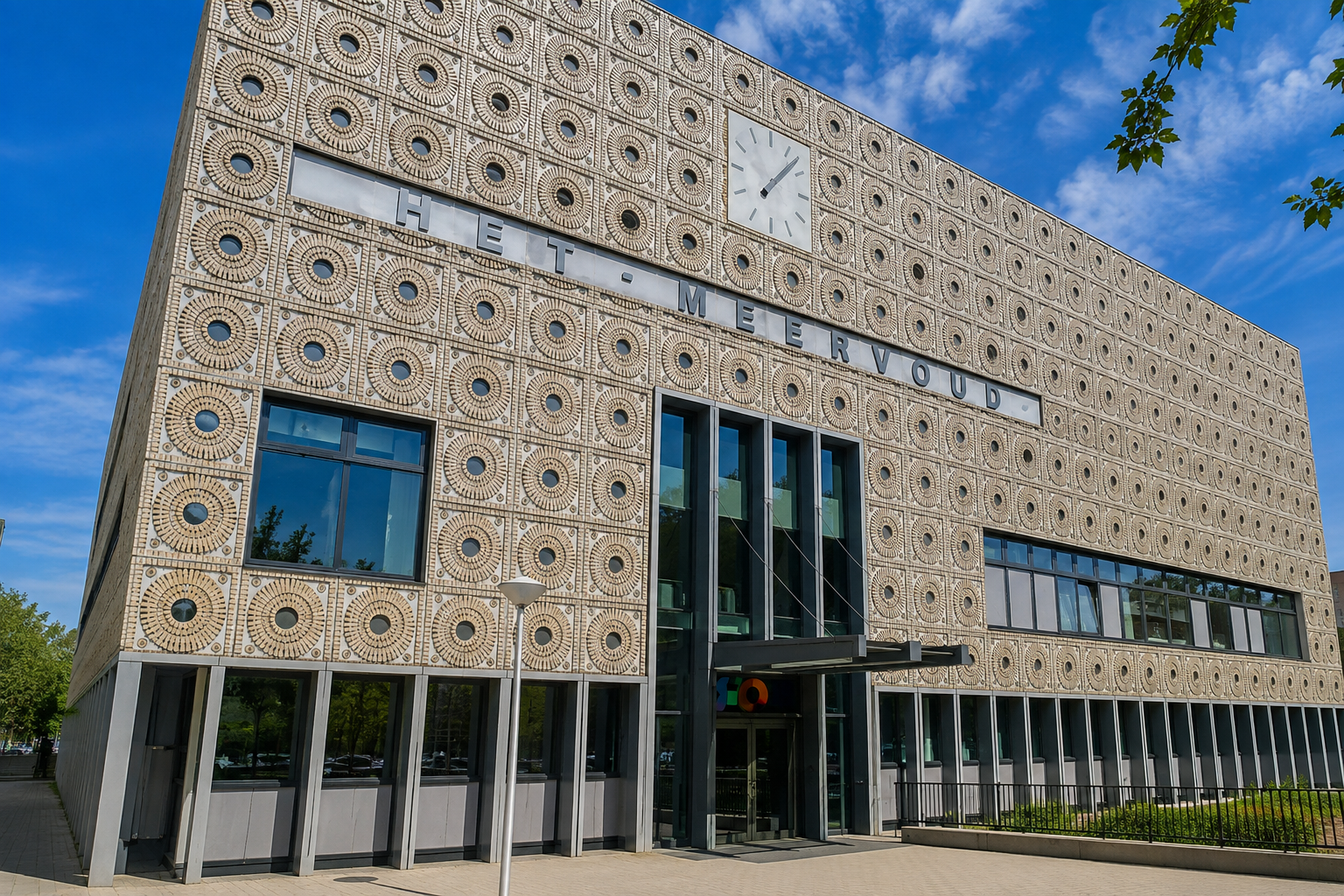
Stichting Bouwresearch was based in the Groothandelsgebouw in Rotterdam, situated directly across from the Bouwcentrum, a hub of Dutch construction knowledge at the time. This location placed the foundation at the heart of the country’s building sector, close to the people and institutions it served.
The working model of Stichting Bouwresearch was collaborative by design. Researchers, engineers, contractors, designers, and public authorities were brought together to identify practical problems and work toward shared solutions. Rather than issuing top-down mandates, the foundation acted more like a facilitator, translating raw research into guidance that professionals could actually use on site.
This approach helped Stichting Bouwresearch build a reputation as a neutral and dependable authority. Its publications weren’t tied to any single commercial interest, which made them widely accepted throughout the Dutch building sector for decades.
Key Publications and Contributions of Stichting Bouwresearch
Over the years, Stichting Bouwresearch produced an extensive body of published work covering a wide range of topics relevant to daily construction practice. Subjects included equipment management, cost control, financing and policy planning within contracting firms, transport logistics during the building process, and even building security.
These publications were valuable precisely because they were practical rather than theoretical. A contractor working on cost control, for example, could turn to Stichting Bouwresearch’s guidance and find something directly applicable to their situation, not an abstract academic study disconnected from real project constraints.
This applied focus is one of the reasons the name Stichting Bouwresearch still appears in older technical documents and reference materials today. Many of the standards and guidelines it produced became embedded in everyday professional practice long after the original publications were released.
Stichting Bouwresearch and Building Safety Standards
Safety was always a central concern for Stichting Bouwresearch. The foundation became particularly known for developing standards related to vibrations caused by installations inside buildings, a technical issue that affects both structural integrity and occupant comfort.
By researching how vibrations from mechanical systems, traffic, or other sources affected buildings, Stichting Bouwresearch helped establish norms that protected both the longevity of structures and the well-being of the people using them. These vibration standards became a recognized reference point within the industry, cited well beyond the immediate community of construction professionals.
This kind of technical, safety-focused output illustrates why Stichting Bouwresearch mattered so much. It wasn’t producing marketing material or vague industry commentary. It was generating concrete, testable standards that engineers could rely on when making real decisions about real buildings.
The Relationship Between Stichting Bouwresearch and CUR
Stichting Bouwresearch did not operate in complete isolation from other knowledge institutions. A related organization, the Civieltechnisch Centrum Uitvoering, Research en Regelgeving, known as CUR, had already been established in 1952, seven years before Stichting Bouwresearch itself came into being.
Both organizations were, in a sense, products of the same post-war rebuilding urgency. CUR focused specifically on concrete behavior and structural performance, addressing the shortage of technical knowledge about reinforced and prestressed concrete. Stichting Bouwresearch had a broader mandate covering building methods generally, but the two organizations shared a similar philosophy: pool knowledge, coordinate research, and make the results available to the wider industry rather than keeping them locked inside individual companies.
For years, these were separate but complementary organizations. It’s easy for people researching the topic today to confuse the two, since their missions overlapped so closely, but understanding that Stichting Bouwresearch and CUR were distinct entities before eventually joining forces helps make sense of later developments in this story.
The Merger That Created SBRCURnet
By the early 2000s, Stichting Bouwresearch had increasingly become known simply as SBR, reflecting a shift toward broader knowledge dissemination rather than research alone. This evolution set the stage for a larger change.
In 2013, Stichting Bouwresearch merged with CURnet, the organizational successor to the earlier CUR, to form a new entity called SBRCURnet. The merger brought together decades of accumulated expertise from both building construction and civil engineering under a single knowledge network. The newly combined organization was based at De Bouwcampus, located on the grounds of Delft University of Technology, placing it firmly within one of the Netherlands’ most important engineering and research communities.
SBRCURnet continued producing well-known resources such as SBR reference details, free information sheets, and CUR recommendations, carrying forward much of the practical, applied spirit that had defined Stichting Bouwresearch since its founding.
The Legacy of Stichting Bouwresearch Today
Despite its strong reputation, SBRCURnet officially ceased operating as an independent organization on December 31, 2017. Changes in funding structures and shifts in how knowledge institutions were organized across the Netherlands played a significant role in this closure.
Even so, the disappearance of the organization did not erase its influence. The knowledge, standards, and reference materials developed under the Stichting Bouwresearch name didn’t vanish along with the foundation itself. Much of it was absorbed into successor bodies and continues to inform construction practice, regulatory discussions, and technical reporting throughout the Dutch building industry.
This is precisely why so many professionals still encounter the term today, whether in an old technical report, a construction textbook, or archived project documentation. The organization behind the name may no longer exist, but its output remains embedded in the practical fabric of Dutch construction.
Why People Still Search for Stichting Bouwresearch
Anyone doing research into Dutch building history, contract archives, or older technical standards is likely to come across Stichting Bouwresearch sooner or later. Because the operated for decades and touched nearly every corner of the construction process, from cost management to structural safety, its documents are scattered widely across professional and academic sources.
Understanding the full history clarifies a few common points of confusion. Stichting Bouwresearch was not the same organization as CUR, even though the two eventually merged. It was also not identical to SBRCURnet, which was the result of that merger and existed as a separate chapter in the same overall story. Recognizing these distinctions helps make sense of why references to Stichting Bouwresearch, CUR, CURnet, and SBRCURnet can all appear within the same historical timeline without being interchangeable.
Final Thoughts
Stichting Bouwresearch occupies an important place in the history of Dutch construction. Born out of post-war necessity, it grew into one of the most trusted knowledge institutions in the building sector, shaping everything from cost control practices to vibration safety standards. Its eventual merger into SBRCURnet, and that organization’s later closure, mark the end of its life as an independent entity, but not the end of its influence.
For professionals working in construction today, understanding the story of Stichting Bouwresearch offers more than historical trivia. It explains why certain standards and reference materials still carry weight, and it provides useful context for anyone piecing together the evolution of building knowledge in the Netherlands.
Read more trending Blogs on zio magazine.