
Walk through any traditional market in Croatia, Bosnia, or Serbia, and you will likely hear locals refer to pravi celer as a kitchen essential. For anyone unfamiliar with South Slavic languages, the term might sound unusual at first, but its meaning is refreshingly simple. This article explores exactly what pravi celer is, where the name comes from, and why this humble vegetable has held such an important place in traditional cooking and home remedies for generations.
What Does Pravi Celer Actually Mean
The phrase pravi celer comes from South Slavic languages, specifically Croatian, Bosnian, and Serbian. The word pravi translates to “true” or “real,” while celer simply means celery. Put together, pravi celer means true celery or real celery, a phrase used to clearly identify the classic, cultivated celery plant that people have grown and cooked with for centuries.
This naming convention exists for a practical reason. In regions where several similar-looking plants share overlapping local names, calling something pravi celer removes any ambiguity. It tells the listener you mean the familiar, edible garden celery, not a wild look-alike or an ornamental relative that happens to resemble it.
The Botanical Identity of Pravi Celer
Scientifically, pravi celer is classified as Apium graveolens, a plant belonging to the Apiaceae family, which also includes parsley, carrots, fennel, and dill. This shared family lineage explains why pravi celer has that distinctive earthy, aromatic quality that overlaps slightly with some of its plant relatives.
The species name graveolens actually means “heavy-scented” in Latin, and anyone who has crushed a celery leaf between their fingers will immediately understand why. That strong, green, slightly peppery aroma is one of the most recognizable traits of pravi celer, distinguishing it from milder, blander vegetables in the same general category.
Where Pravi Celer Originally Came From
Pravi celer is native to marshland regions across the Mediterranean, North Africa, and parts of Asia. Its natural habitat favored damp, mineral-rich soil, which shaped many of the plant’s early growing characteristics. Long before it became a common vegetable crop, pravi celer was actually cultivated primarily for its medicinal properties rather than as food.
Over time, as people began experimenting more with its culinary applications, pravi celer gradually shifted from being viewed mainly as a healing herb toward becoming a staple vegetable in everyday cooking. This transition took centuries, and traces of its original medicinal reputation still linger in how some households use it today.
How Pravi Celer Differs From Supermarket Celery
Many people assume pravi celer and the celery sold in most grocery stores are essentially the same thing, but there are meaningful differences worth understanding. Standard supermarket celery, technically known as Apium graveolens var. dulce, has been specifically bred over generations to produce thick, pale, mild-tasting stalks that are easy to eat raw.
Pravi celer, in its more traditional form, tends to be considerably more robust. It’s stronger in flavor, more intensely aromatic, and typically grown to use the entire plant rather than just the stalks. Leaves, stalks, seeds, and root are all valued parts of pravi celer, which reflects a more traditional, whole-plant approach to cooking compared to the narrower focus found in modern commercial celery production.
The Two Main Forms of Pravi Celer
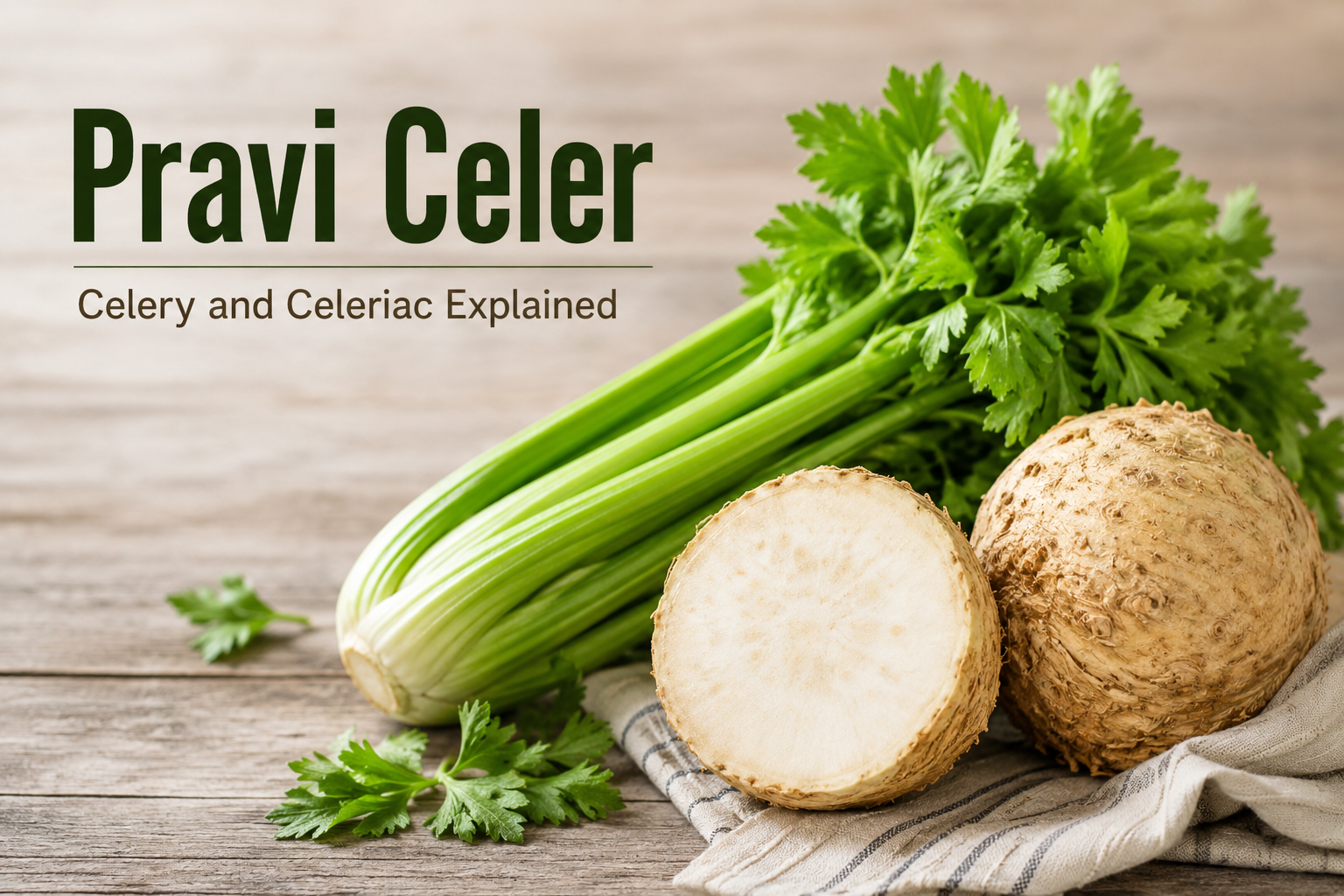
One especially interesting aspect of pravi celer is that it exists in two primary forms, both of which fall under the same general name. The first form consists of the long, green stalks most people picture when they think of celery. These are crunchy, fresh, and commonly used raw in salads or as a crisp addition to snack plates.
The second form is the root, often referred to as celeriac. This part of pravi celer looks rough and somewhat unappealing on the outside, but once peeled, it reveals a soft, creamy interior with a flavor that’s both earthy and slightly nutty. Both the stalk form and the root form of pravi celer are nutritious, though they’re used quite differently in the kitchen depending on regional cooking traditions.
The Taste and Texture of Pravi Celer
The flavor profile of pravi celer is part of what makes it so distinct from ordinary supermarket celery. Eaten raw, it has a crunchy texture with a slightly salty, fresh taste. Once cooked, however, the flavor mellows considerably, becoming softer and taking on a subtle nutty quality that works particularly well in soups, stews, and slow-cooked dishes.
This dual personality, crisp and bright when raw, warm and mellow when cooked, is one of the reasons pravi celer remains such a versatile ingredient in Balkan and Central European kitchens. Cooks can rely on the same plant to serve completely different culinary purposes depending on how it’s prepared.
Traditional Culinary Uses of Pravi Celer
Across Croatia, Bosnia, Serbia, and neighboring regions, pravi celer plays a foundational role in many classic recipes. It’s a common base ingredient in soups and stews, where its aromatic qualities help build depth of flavor alongside other root vegetables and herbs. The leaves, which carry a particularly concentrated flavor, are often used sparingly to season broths and sauces.
Beyond savory cooking, pravi celer has also historically been used in herbal preparations, continuing its older reputation as a plant with medicinal value. This dual identity, part kitchen staple and part traditional remedy, has helped pravi celer maintain a lasting presence in households where cooking traditions are passed down through generations rather than picked up from modern trends.
Growing Pravi Celer at Home
For those interested in cultivating their own pravi celer, it helps to know a bit about its growing habits. This plant is classified as biennial, though depending on climate and cultivation practices, it can sometimes behave as an annual or even a perennial. In its first growing season, pravi celer develops its recognizable leaves and stalks. If left to mature into a second year, it sends up tall flower heads and eventually produces seeds.
At full maturity, pravi celer typically reaches between sixty and ninety centimeters, or roughly two to three feet, in height. The stalks are ribbed and upright, ranging from pale to medium green, while the leaves are finely divided and glossy, somewhat resembling flat-leaf parsley in appearance.
Pravi celer performs best as a cool-season crop, thriving in spring and autumn conditions. It tends to struggle during intense summer heat, which can cause the plant to bolt prematurely, sending energy into flowering rather than continuing to produce the leafy growth most cooks want to harvest.
The Nutritional Value of Pravi Celer
Beyond its culinary versatility, pravi celer is valued for its nutritional content. It’s particularly rich in vitamin K, vitamin C, potassium, and dietary fiber, making it a genuinely beneficial addition to a balanced diet rather than just a flavor enhancer.
One especially notable characteristic of pravi celer is its extremely high water content, often cited at around ninety-five percent. This makes it a naturally hydrating food, which partly explains why it has long been associated with health-conscious eating patterns, particularly in regions where fresh, whole-food ingredients are prioritized in everyday cooking.
Health Benefits Associated With Pravi Celer
Traditional and modern wellness perspectives alike point to several potential benefits linked to regular consumption of pravi celer. Its high fiber content supports healthy digestion, while its water content and mineral profile contribute to overall hydration and general wellness.
Some households have long used pravi celer as part of home remedies aimed at supporting general health, reflecting its older reputation as a medicinal plant before it became primarily known as a food ingredient. While modern nutritional science continues to study specific health claims tied to celery in general, the long-standing cultural trust placed in pravi celer as a health-supporting food remains strong across the regions where it’s traditionally grown and consumed.
Storing and Preserving Pravi Celer
Because freshness significantly affects both flavor and nutritional value, proper storage matters quite a bit when it comes to pravi celer. The stalks tend to stay crisp longest when stored in cool, humid conditions, which is why many households keep them wrapped or refrigerated shortly after harvesting or purchasing.
The root form of pravi celer, meanwhile, tends to have a longer shelf life thanks to its denser structure, similar to how other root vegetables generally store better than leafy greens. Understanding these differences helps home cooks make the most of pravi celer without unnecessary waste, particularly if they’re working with the whole plant rather than just one part of it.
Why Pravi Celer Remains Culturally Significant
The continued use of the term pravi celer says something important about food culture in the Balkans and surrounding regions. Rather than simply adopting a generic international name for celery, communities have preserved a specific term that reflects both linguistic heritage and a genuine distinction in how the plant is grown, prepared, and valued.
This attachment to tradition isn’t just about nostalgia. Pravi celer, in its more robust, whole-plant form, genuinely differs from the mild, uniform celery produced for mass grocery distribution. Keeping the distinct name alive helps preserve awareness of that difference, ensuring that traditional growing and cooking practices aren’t simply absorbed into a more generic, commercialized version of the vegetable.
Final Thoughts
Pravi celer represents far more than a regional name for a common vegetable. It carries linguistic history, botanical distinction, and generations of culinary and medicinal tradition rooted in South Slavic culture. From its marshland origins to its role in modern kitchens across Croatia, Bosnia, and Serbia, pravi celer continues to serve as both a practical ingredient and a meaningful link to traditional foodways.
Whether you encounter it as crisp green stalks in a market stall or as the dense, earthy root form used in slow-cooked dishes, understanding what pravi celer truly is adds appreciation for a vegetable that has quietly supported healthy eating and traditional cooking for far longer than most people realize.
Read more trending Blogs on zio magazine.