
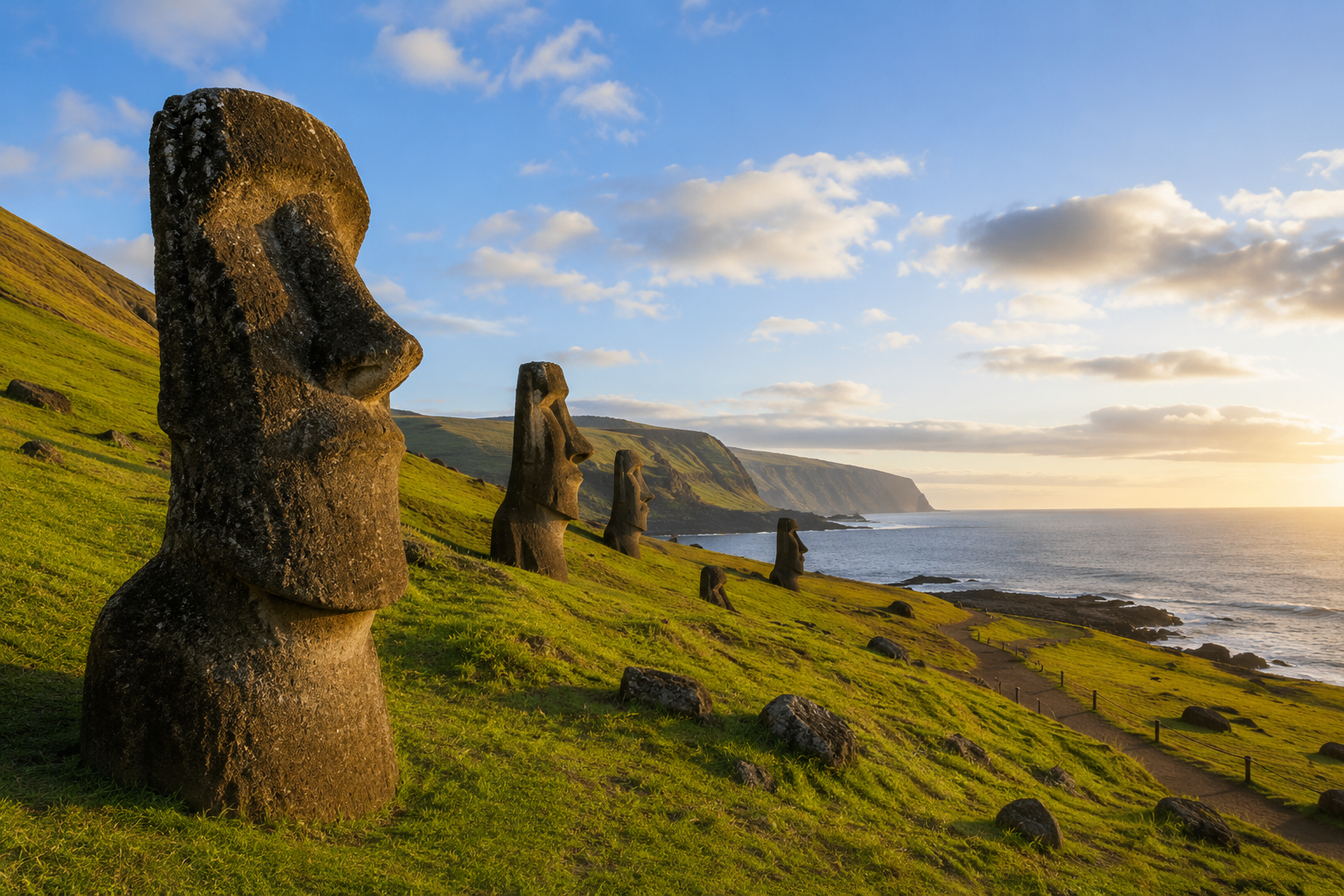
Few places on Earth capture the imagination quite like påskön Rapa Nui. Known internationally as Easter Island, this small, isolated piece of land in the middle of the Pacific Ocean has become synonymous with mystery, ancient craftsmanship, and one of the most unusual chapters in human history. For many people, the name alone brings to mind rows of towering stone faces staring silently out toward the sea.
This article takes a closer look at påskön Rapa Nui, exploring its origins, its extraordinary statues, the culture that built them, and why this remote island continues to draw curiosity from historians, travelers, and casual readers alike.
What Is Påskön Rapa Nui
Påskön Rapa Nui refers to Easter Island, a small volcanic island located in the southeastern Pacific Ocean, belonging to Chile. The Swedish term påskön translates directly to “Easter Island,” while Rapa Nui is the indigenous Polynesian name for the same place, used by the people who have called it home for centuries.
Together, the phrase påskön Rapa Nui captures both the European naming tradition and the original identity of the island as understood by its native inhabitants. This dual naming isn’t unusual for places with a long colonial history, but it does highlight an important point: to truly understand the island, you need to look at it through the lens of its own people, not just the outside visitors who eventually gave it a different name.
The Origins of Life on Påskön Rapa Nui
The story of påskön Rapa Nui begins with Polynesian voyagers, who reached the island sometime between the ninth and thirteenth centuries. The exact timing remains a subject of academic debate, but there is broad agreement that a Polynesian society settled the island and developed a distinct culture almost entirely isolated from outside influence.
Given how far påskön Rapa Nui sits from any other landmass, this settlement itself was a remarkable achievement of ancient seafaring. These early inhabitants crossed vast stretches of open ocean using navigational skills passed down through generations, eventually finding and settling one of the most remote inhabited places on the planet.
Why Påskön Rapa Nui Became So Isolated
Isolation is one of the defining features of påskön Rapa Nui. The island sits thousands of kilometers away from the nearest populated landmass, making it one of the most geographically isolated inhabited places in the world. This isolation shaped nearly every aspect of the island’s history, from its unique cultural development to its eventual struggles with limited resources.
Because the population on påskön Rapa Nui had little to no contact with the outside world for centuries, the society that developed there followed its own trajectory, free from external influence. This isolation is part of what makes the island’s history so fascinating to researchers, since it represents a kind of natural experiment in how an isolated human community can grow, thrive, and eventually face serious environmental and social challenges entirely on its own terms.
The Moai Statues of Påskön Rapa Nui
No discussion of påskön Rapa Nui would be complete without mentioning its most famous cultural achievement: the moai statues. These massive stone figures, carved to represent deified ancestors, remain the single most recognizable symbol associated with the island anywhere in the world.
The moai were carved primarily between the fifteenth and seventeenth centuries, during what archaeologists often describe as the middle to late statue-building phase of the island’s history, though the practice of carving these figures likely extends further back. Nearly nine hundred moai statues have been documented across påskön Rapa Nui, ranging dramatically in size, from a few feet tall to towering examples reaching close to eighty feet in height.
How the Statues Were Made
The people of påskön Rapa Nui carved their statues primarily from volcanic tuff, a relatively soft rock formed from compacted volcanic ash, which made it possible to shape with hand tools. The carving process relied on simple handheld chisels known as toki, which have been found in enormous numbers around the main quarry site.
Interestingly, the highest quality toki were made from hawaiite, a particularly hard type of rock found in only one specific location on the island. This scarcity made high-quality tools valuable, especially given how central they were to producing something as culturally important as the moai. The skill and organization required to consistently produce statues of this scale, using only stone-age tools, says a great deal about the sophistication of the society living on påskön Rapa Nui at the time.
The Meaning Behind the Statues
The moai found across påskön Rapa Nui were not simply decorative artwork. They represented ancestors and were believed to hold a kind of living presence, often referred to as the “living faces” of those who had passed. When a high-ranking chief died, it was common practice for the community to carve a moai in his honor, positioning it on a stone platform known as an ahu.
These statues typically faced inland, watching over the villages and communities they were meant to protect, rather than looking out toward the ocean. This detail matters because it reflects the underlying belief system of påskön Rapa Nui, where ancestral spirits were thought to continue guarding and influencing the lives of their descendants long after death.
Transporting the Massive Stone Figures
One of the enduring questions surrounding påskön Rapa Nui involves exactly how such enormous statues were moved from the quarry to their final resting places around the island, sometimes over considerable distances. Given the size and weight of many moai, this would have required significant coordination and manpower.
Researchers have proposed several theories over the years, ranging from wooden sledges to a rocking, walking-like motion achieved through ropes and careful balancing. While debate continues among specialists, the fact that this question remains actively studied today speaks to just how much påskön Rapa Nui still has to teach us about ancient engineering and communal organization.
European Contact and the Changing Fate of the Island
The first recorded European contact with påskön Rapa Nui came in 1722, when a Dutch expedition led by Jacob Roggeveen arrived and documented the island. Roggeveen’s written accounts described islanders actively venerating the standing statues, offering a rare and valuable early glimpse into the spiritual practices still active on the island at that time.
Unfortunately, the centuries following this initial contact brought significant hardship to påskön Rapa Nui. The nineteenth century saw slaving raids, the introduction of new diseases, and periods of internal conflict, all of which took a heavy toll on the island’s population and cultural continuity. By the late nineteenth century, most of the standing moai across the island had been toppled, whether through conflict, changing beliefs, or the broader disruption caused by outside contact.
The Cultural Legacy That Survived
Despite these hardships, the cultural identity of påskön Rapa Nui did not disappear. The Rapa Nui people and their descendants have continued to preserve and share their history, language, and traditions, ensuring that the story of the island remains connected to the living community rather than existing only as an archaeological curiosity.
In modern times, many of the fallen statues across påskön Rapa Nui have been re-erected as part of research and heritage preservation efforts. These restoration projects have allowed visitors and researchers alike to experience the statues in something closer to their original context, standing along the coastline as they once did centuries ago.
Recognition as a World Heritage Site
Today, påskön Rapa Nui holds recognition as a UNESCO World Heritage Site, acknowledging its status as a place of exceptional cultural and historical significance. This designation reflects the unrivaled cultural landscape created by the island’s original inhabitants, who developed a tradition of monumental sculpture and architecture almost entirely independent of outside influence.
This kind of formal recognition matters because it helps ensure ongoing protection and research funding for the island’s remaining archaeological sites. Without this kind of attention, the fragile volcanic stone used to create many of the moai across påskön Rapa Nui would be far more vulnerable to erosion, weathering, and the pressures of increasing tourism.
Why People Remain Fascinated by Påskön Rapa Nui
Part of the enduring appeal of påskön Rapa Nui lies in the unanswered questions that still surround it. Even with decades of archaeological research, specialists continue to debate exact dates, transportation methods, and the precise social structures that allowed such an ambitious statue-carving tradition to flourish on such a small and isolated island.
This combination of visible, tangible history, standing right there on the landscape, paired with genuine scientific mystery, is relatively rare. Most historical sites around the world have been thoroughly documented and explained, but påskön Rapa Nui continues to generate new research, new theories, and new discoveries, keeping the island relevant in both academic circles and popular culture.
Visiting Påskön Rapa Nui Today
For travelers, visiting påskön Rapa Nui today means experiencing a landscape unlike almost anywhere else on Earth. Walking among the ahu platforms, seeing the quarry at Rano Raraku where many statues remain partially carved into the rock, and standing before rows of restored moai offers a direct connection to a civilization that built something extraordinary with remarkably limited resources.
Many visitors describe the experience as deeply moving, partly because of the statues themselves and partly because of the isolation of the island. Reaching påskön Rapa Nui still requires significant travel, and that remoteness is part of what makes the experience feel so distinct from more accessible historical destinations.
Final Thoughts
The story of påskön Rapa Nui is a story of human ingenuity, isolation, resilience, and the enduring power of cultural memory. From its earliest Polynesian settlers to the towering moai that still watch over its coastline, the island represents one of the most remarkable chapters in the history of human civilization.
Even today, with ongoing research and careful preservation efforts, påskön Rapa Nui continues to reveal new details about its past while remaining a living cultural home for the Rapa Nui people. Its combination of mystery, artistry, and sheer geographic remoteness ensures that this small Pacific island will continue capturing the world’s attention for generations to come.
Read more trending Blogs on zio magazine.