
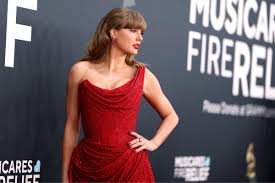
The phrase “Taylor Swift snubbed Brit Awards” started trending the moment the 2026 ceremony wrapped up in Manchester. For an artist who has spent the last two years breaking nearly every record the music industry keeps track of, walking away from a major awards show with nothing felt like news worth talking about. But the story behind Taylor Swift snubbed Brit Awards headlines is more layered than a simple loss. It touches on how the Brits work, why international artists often struggle there, and what this moment actually means for Swift’s career going forward.
The Night Taylor Swift Left Manchester Empty-Handed
On February 27, 2026, the Brit Awards took place at Manchester’s Co-op Live arena, hosted by comedian Jack Whitehall. Taylor Swift entered the night with two nominations tied to her album The Life of a Showgirl and its lead single, “The Fate of Ophelia.” She was up for International Artist of the Year and International Song of the Year, two of the most competitive categories on the card.
By the end of the evening, she had lost both. The International Song of the Year trophy went to “Apt.,” the 2024 collaboration between Bruno Mars and Rosé. The International Artist of the Year award went to Spanish singer-songwriter Rosalía, who beat out a stacked field that also included Sabrina Carpenter and Chappell Roan. That double loss is exactly why so many headlines used the phrase Taylor Swift snubbed Brit Awards to describe what unfolded.
Why Swift Wasn’t Even in the Room
Adding to the intrigue, Swift wasn’t present at the ceremony to witness the results firsthand. For weeks leading up to the show, rumors swirled that she might make a surprise appearance, especially since Manchester was one of the few major UK cities left off her Eras Tour schedule. Fans speculated this omission was intentional, setting up a big reveal at the Brits.
Jack Whitehall put those rumors to rest just days before the event, confirming on Hits Radio that Swift would not be attending. He noted how unconvincing his own denial sounded, joking about it before confirming plainly that she simply would not be there. Reports later suggested Swift had actually flown into London roughly two weeks earlier, but ultimately chose to stay home with fiancé Travis Kelce rather than travel north for the ceremony. That decision meant the Taylor Swift snubbed Brit Awards narrative played out without her present to respond to it in real time.
Understanding What “Snubbed” Actually Means Here
It’s worth pausing on the word “snubbed” itself, because not everyone agrees it applies here. Some critics pushed back hard on the framing, pointing out that being nominated for two major awards and simply losing both isn’t the same thing as being overlooked entirely. A snub, in the traditional sense, usually refers to an artist being left off the nominee list altogether despite having a clearly deserving body of work.
Swift, by contrast, was very much in the conversation. She was nominated, she was considered a frontrunner by multiple outlets covering the ceremony, and she still lost. That distinction matters, but it hasn’t stopped the phrase Taylor Swift snubbed Brit Awards from becoming the dominant way people describe the outcome. In pop culture coverage, “snub” has increasingly come to mean any instance where a heavily favored artist fails to win, regardless of whether they were nominated in the first place. That looser definition is exactly what fueled this particular news cycle.
A Look at Swift’s Full History With the Brits
To understand why this loss generated so much attention, it helps to look at Swift’s broader relationship with the Brit Awards. She has been nominated nine times over the course of her career and has won twice, including the International Female Solo Artist award tied to her Blank Space era. She also received the Global Icon Award back in 2021, a special honor reserved for artists with outsized cultural influence.
Given that history, expectations were understandably high heading into 2026. Swift wasn’t a newcomer hoping for her first nomination. She was an established Brit Awards winner with a strong track record, up against a genuinely competitive field, and coming off one of the most commercially dominant stretches any artist has had in years. That combination of high expectations and quiet losses is precisely what made the Taylor Swift snubbed Brit Awards story spread so quickly across entertainment media.
The Competition She Was Up Against
Part of what makes this loss less shocking on closer inspection is just how strong the competing field was. Rosalía, who took home International Artist of the Year, has built a reputation as one of the most inventive voices in contemporary pop. Her work blends flamenco, reggaeton, and experimental electronic production in ways that critics have praised for years, and her win reflected genuine industry respect rather than a fluke upset.
Similarly, “Apt.” by Bruno Mars and Rosé had already proven itself as a global phenomenon well before the Brits even took place. The song dominated charts internationally and had the kind of cultural staying power that award voters tend to reward. So while “The Fate of Ophelia” held the number one spot on UK charts for seven weeks, a genuinely impressive run, it was still competing against songs and artists with their own massive footprints. That context adds nuance to any Taylor Swift snubbed Brit Awards discussion, because it shows the losses weren’t the result of Swift being overlooked so much as being outvoted in tight, high-caliber races.
How Fans and Critics Reacted
Online reaction split fairly quickly into two camps. One group treated the results as proof that Swift’s dominance has limits, at least in the eyes of British award voters who don’t always mirror American chart performance or streaming numbers. This camp leaned heavily into the Taylor Swift snubbed Brit Awards framing, treating it as a meaningful moment worth dissecting.
The other camp argued the opposite, insisting that losing two competitive nominations to strong contemporaries isn’t a snub at all, just a normal outcome of any awards show with a genuinely deep pool of talent. Social media commentary picked apart the semantics in real time, with some pointing out that calling it a snub undersells just how competitive the International categories were this year. Regardless of which side people landed on, the sheer volume of conversation confirmed that Taylor Swift snubbed Brit Awards had become one of the most talked-about storylines to come out of the entire ceremony.
Why This Loss Barely Dents Her Career
Despite all the attention, it’s worth stepping back and asking what this actually means for Swift long-term. The honest answer is not much. Her career has weathered bigger disappointments than a single awards ceremony, and her commercial standing remains essentially untouched. Around the same time as the Brits, her song “Opalite” was celebrating a number one spot on Billboard’s Hot 100, a reminder that chart success and awards show outcomes don’t always move in sync.
Awards shows, especially international ones judged by voters outside an artist’s home country, don’t always reflect commercial dominance. The Brits in particular have a long history of favoring artists with strong ties to British music culture or those seen as pushing genre boundaries in unexpected ways. Rosalía’s win fits that pattern well. So while the Taylor Swift snubbed Brit Awards headlines captured attention for a news cycle, they don’t really threaten her broader legacy or her standing as one of the most successful artists working today.
Life Beyond the Red Carpet
Interestingly, Swift’s absence from the ceremony wasn’t really about the awards at all. Reports indicated she chose to stay home with Travis Kelce rather than make the trip to Manchester, prioritizing personal time over industry appearances. The couple has been dealing with a busy stretch, balancing Kelce’s ongoing NFL career with wedding planning for later this year, and public appearances have understandably taken a back seat at times.
That personal context adds another layer to how people interpreted the Taylor Swift snubbed Brit Awards story. Rather than seeing her absence as a sign of indifference toward the industry, many read it as a simple scheduling and lifestyle choice, one that happened to coincide with a night where she didn’t end up winning anyway. Whether or not she’d have attended had she expected to win is impossible to know, but her decision to stay home reflects a broader pattern of an artist increasingly comfortable stepping back from every single industry event, even major ones tied to her own work.
Putting the Moment in Perspective
Awards ceremonies will always generate headlines, especially when an artist as prominent as Swift is involved. But it’s useful to remember that losing a nomination, even two in one night, doesn’t erase years of critical acclaim, chart records, and cultural influence. The Taylor Swift snubbed Brit Awards conversation says less about her actual standing in music and more about how quickly modern entertainment coverage turns any unexpected result into a major storyline.
In the end, the 2026 Brit Awards will likely be remembered as a night where genuinely excellent competitors, particularly Rosalía and the “Apt.” collaboration, earned recognition on their own merits. Swift’s losses were real, but they were losses within tough categories, not evidence of the industry turning its back on her. That distinction is easy to lose in viral headlines, but it matters for anyone trying to understand what actually happened that night in Manchester, and why the phrase Taylor Swift snubbed Brit Awards became such a talking point in the days that followed.
Read more trending Blogs on zio magazine.